

What Does Red Light Therapy Do for Your Skin?


If you have recently browsed skincare content, you may have encountered various red light therapy devices (e.g., face masks, handheld wands, large panels) in online stores, social platforms, spas, or dermatology clinics, all claiming to significantly improve skin appearance. Faced with such a wide variety of product forms, many people ask a reasonable question: Is red light therapy a gimmick? What does red light therapy do for your skin?

How Does Red Light Therapy Work on the Skin?

Red light therapy is a form of Photobiomodulation (PBM). It uses nonionizing, generally nonthermal red or near-infrared light to influence biological activity. Red light is generally defined as the 620 to 700 nm range, while near-infrared light spans approximately 700 to 1,440 nm. Most home devices use light-emitting diodes, or LEDs.[1]
How does red light therapy work? The leading model begins when cellular chromophores absorb photons. Cytochrome c oxidase in mitochondria is a commonly proposed target. This interaction may affect the electron transport chain, adenosine triphosphate production, nitric oxide, reactive oxygen species, and downstream signaling. The exact pathways remain under investigation.[2,3]
Red light is absorbed more superficially, while near-infrared light can reach deeper tissue layers. PBM is studied in dermatology for skin rejuvenation, acne support, hair concerns, and wound and scar care.[1]
The Potential Benefits of Red Light Therapy for Skin
So, what does red light therapy do for your skin in practical terms? Research suggests several potential benefits, although responses differ among products, intended areas, skin types, and protocols.
l Supports Collagen and Elasticity
PBM may influence fibroblast activity and extracellular matrix remodeling. These processes can support collagen and elastin production, which may improve firmness and help reduce the appearance of fine lines over time.[2,3]
l May Improve the Appearance of Texture and Tone.
Studies of red light and combined red and near-infrared protocols report changes in skin roughness, texture, and overall appearance. Results cannot be transferred automatically from one device or dose to another.[3]
l Supports Calmer-looking Skin
Red light may modulate inflammatory signaling and microcirculation. This may help reduce the appearance of temporary redness. For acne-focused care, some protocols combine blue light, which targets bacterial porphyrins, with red light for inflammatory support.[1,3]
l May Support Skin Recovery
PBM has been studied for re-epithelialization and scar quality. Evidence is not uniform. A 2025 systematic review and meta-analysis of animal burn-wound studies found no statistically significant improvement in wound retraction or collagen deposition under the analyzed protocols.[4] PBM is not a substitute for medical wound care.
What does red light therapy do for your face? The same mechanisms may support smoother texture, firmness, and a more even-looking complexion. However, facial skin, the eye area, and body skin require different coverage and dosing.

Potential Benefits From Consistent Red Light Therapy Use
Considerations When Choosing a Red Light Therapy Skin Care Product
Selecting red light therapy skin care products involves more than comparing price points. A few factors are worth checking before purchase.
|
Factor |
What to Check |
|
Wavelength |
Look for the exact wavelength and its intended target. Common PBM devices use approximately 630 to 660 nm red light and 830 to 850 nm near-infrared light. |
|
Delivered Dose |
Review irradiance in mW/cm², operating distance, session length, and, when provided, fluence in J/cm². More exposure is not automatically more useful because PBM can show a biphasic dose response.[3] |
|
Coverage |
Match the format to the area. Masks suit facial zones, panels cover broader areas, and wands provide focused application. |
|
Controls and Fit |
Timers, intensity settings, stable positioning, cleanable contact materials, and eye guidance can support consistent use. |
|
Evidence and Labeling |
Check peer-reviewed evidence, the device’s intended use, safety instructions, and regulatory classification. |
Note: Photobiomodulation (PBM) exhibits a biphasic dose response, meaning treatment outcomes are not simply improved by higher or lower light doses. Instead, there appears to be a defined effective dose range, and exposure outside this range, whether above or below it, can reduce treatment efficacy.
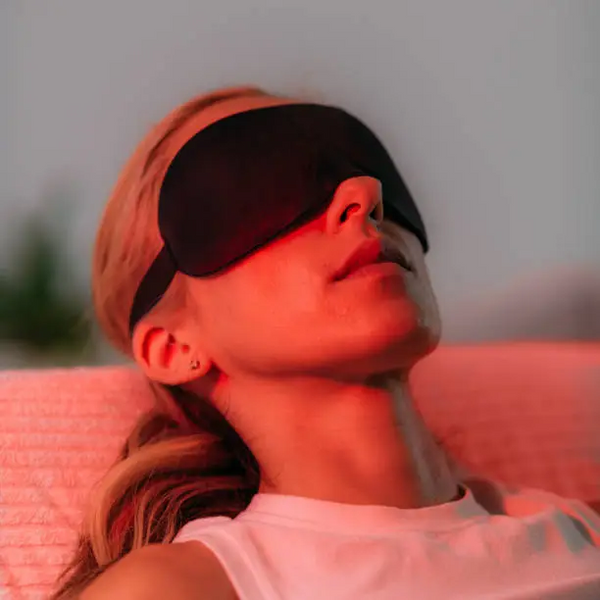
Many red light therapy brands, including Mito Red Light and Hooga, offer devices in a range of sizes and formats, each with its own strengths and limitations, and LifeZoom is one example of a brand offering multiple device formats for different use cases. Its product range illustrates how device format can affect coverage, portability, and intended use: the Veyra Series Curved Silicone Red Light Therapy Panel provides flexible coverage for larger or contoured areas but is less suited to pocket-sized use; the Oclux Light Therapy Eye Mask is designed for focused coverage around the eye area, although eye masks are generally designed with more conservative near-infrared output around the eyes for safety, which can limit their suitability for applications intended to reach deeper tissues; and the Wandia Handheld Red Light Therapy Wand is intended for smaller, more targeted areas where a handheld format may be practical.
These kinds of differences are easier to assess when multiple devices are viewed side by side. People can Explore the LifeZoom red light therapy collection to compare wavelength, coverage, controls, and intended use in one place, helping them identify the option that best matches their specific needs.

Home red light therapy devices can be convenient, while professional red light therapy devices may offer clinician-selected protocols. The setting alone does not determine the outcome. Red and near-infrared light therapy devices still need appropriate wavelength, dose, positioning, and duration.
Is red light therapy good for you? It is generally well tolerated when used as directed, but temporary redness, warmth, or discomfort can occur.[3] People with photosensitive conditions, light-sensitive medications, suspicious skin lesions, or eye concerns can ask a clinician before use. Follow the supplied eye-protection guidance.
Learn more about the differences between red light therapy and blue light therapy: Red Light vs. Blue Light Therapy: Key Differences and How They Can Benefit You
How to Use Red Light Therapy for Skin at Home
Clean and dry the target area, remove clothing or products that may block the light, and position the device exactly as its manual describes. Select the recommended mode, intensity, distance, and session time. Avoid extending a session to compensate for missed use. Stop if persistent irritation or eye discomfort occurs.
Product-specific instructions remain the primary reference.
Explore more practical tips for using red light therapy: Red Light Therapy for Skin Treatments: Useful Tips
How Long Does Red Light Therapy Take to Work on Skin?
Visible cosmetic effects are generally evaluated over several weeks, not after one session. Published studies commonly assess outcomes after about four to twelve weeks. However, there is currently no universally established standard defining the optimal treatment frequency, session duration, or long-term maintenance schedule.
For more consistent tracking, it is recommended to observe the same skin concern under similar lighting and environmental conditions and compare changes at regular intervals. The timeline for results may vary depending on factors such as age, baseline skin condition, treatment area, wavelength, irradiance, dosage, and consistency of use.
If noticeable changes do not appear in the short term, this does not necessarily indicate that longer sessions or higher exposure will produce faster results, and exceeding the manufacturer's recommended guidelines is not advised.
Conclusion
What does red light therapy do for your skin? Evidence suggests potential support for collagen production, fine-line appearance, texture, tone, skin comfort, and selected skin recovery processes. However, results vary, and findings from one device or protocol may not apply universally.
Because devices differ in wavelength, dose, coverage, and intended use, selection should reflect the target area, practical needs, and clear guidance on dosing, positioning, and safety. Comparing different device types across red light therapy brand websites can also help clarify how specifications relate to real-world use and where different formats may offer advantages.
Overall, red light therapy may complement a skin care routine, but realistic expectations matter. Consistent use, appropriate dosing, and evidence-based product selection are more important than broad benefit claims or simply choosing a higher-powered device. Following product-specific guidance on session length, frequency, positioning, and safety remains essential.
References:
[1] Mineroff, J., Maghfour, J., Ozog, D. M., Lim, H. W., Kohli, I., & Jagdeo, J. (2024). Photobiomodulation CME part II: Clinical applications in dermatology. Journal of the American Academy of Dermatology, 91(5), 805–815. https://doi.org/10.1016/j.jaad.2023.10.074
[2] Hernández-Bule, M. L., Naharro-Rodríguez, J., Bacci, S., & Fernández-Guarino, M. (2024). Unlocking the Power of Light on the Skin: A Comprehensive Review on Photobiomodulation. International journal of molecular sciences, 25(8), 4483. https://doi.org/10.3390/ijms25084483
[3] Spongberg, C. V., Stack, E. R., Aprigliano, C., Grinis, D., Sawicki, S., & Elway, M. (2026). What to Look for in Red Light Therapy: A Product Guide Backed by Science. Cureus, 18(3), e105378. https://doi.org/10.7759/cureus.105378
[4] Pradal, L. A., de Freitas, E., Azevedo, M. R. B., Costa, R., & Bertolini, G. R. F. (2025). Photobiomodulation in Burn Wounds: A Systematic Review and Meta-Analysis of Clinical and Preclinical Studies. Photobiomodulation, photomedicine, and laser surgery, 43(1), 8–23. https://doi.org/10.1089/photob.2023.0181
Does Red Light Therapy Eye Mask Work? What to Know About Red Light Eye Masks
In the past few years, red light therapy eye masks have become popular wellness gadgets, but the question that m...
Read more
Are Red Light Therapy Eye Masks Worth It? What to Know Before You Buy
The most commonly asked question related to red light therapy eye masks is, “Is it worth it?” and we totally get w...
Read more
What is the best Red light therapy eye mask? How to choose the right one?
Choosing the right red light therapy eye mask involves more than looking at wavelengths alone. This guide explains ho...
Read more